Package Stuck in Customs? Complete 2026 Guide to Fix & Prevent Delays
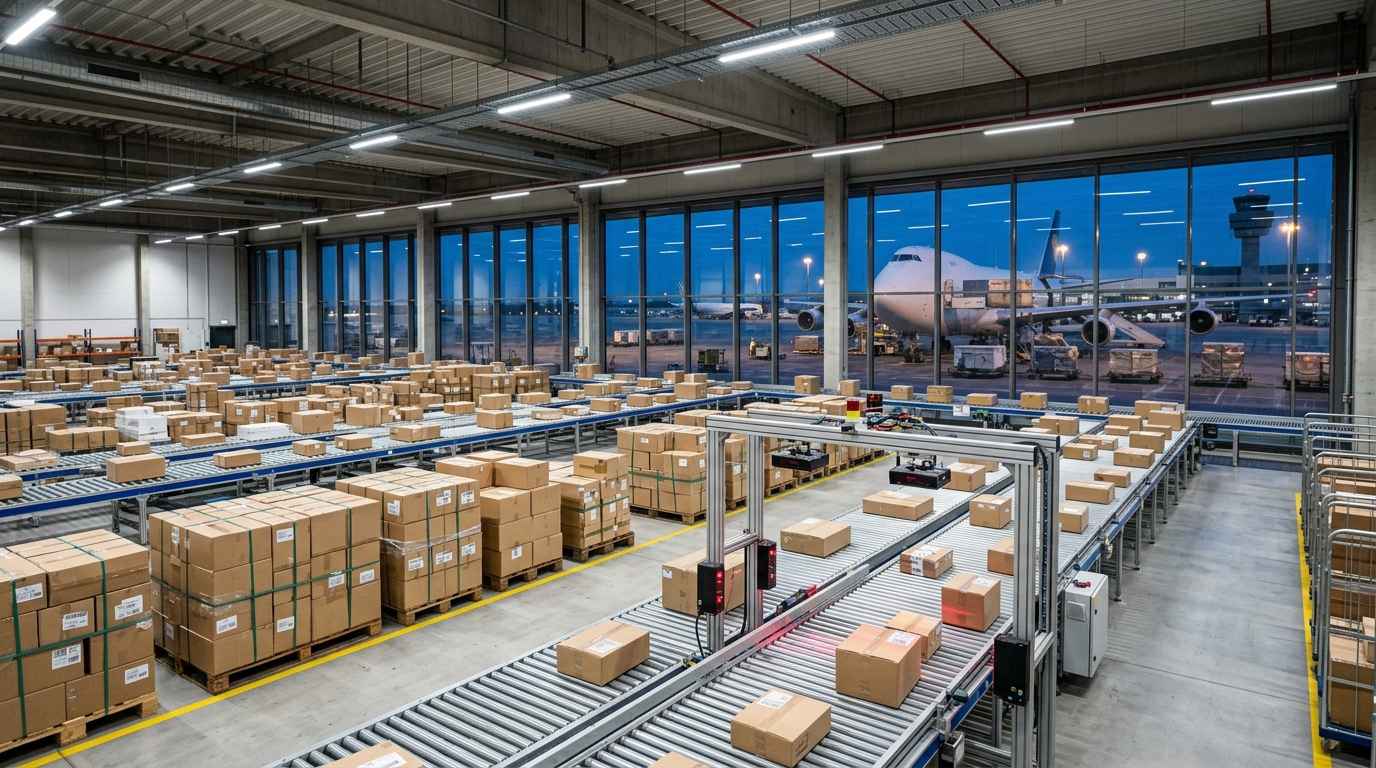
If your package is stuck in customs, don't panic. Most international shipments clear within 1 to 3 business days, but delays can stretch to 7–15 days—or longer—if documentation is missing, duties are unpaid, or the package is flagged for inspection. This guide explains why customs delays happen, how long they typically last, and the exact steps to get your package released.
What Does "Stuck in Customs" Actually Mean?
When your tracking shows "Held by Customs," "Pending Customs Clearance," or "Clearance Delay," it means your package has arrived at the destination country's border and is undergoing official inspection before it can enter domestic delivery.
This does not necessarily mean your package is seized or lost. In most cases, it's simply waiting for:
- Routine processing (normal backlog)
- Documentation verification
- Duty and tax payment
- X-ray or physical inspection
Customs authorities hold packages to ensure they comply with import laws, safety regulations, and tax requirements.
Why Is My Package Stuck in Customs? Top 7 Reasons
Packages get held in customs for a variety of reasons. Here are the most common causes in 2026:
1. Missing or Incomplete Documentation
The #1 reason for customs delays. Required documents typically include:
- Commercial Invoice – must show seller/buyer details, full item description, value, currency, country of origin, and Incoterms
- Packing List – number of packages, weight, dimensions
- Bill of Lading / Air Waybill (AWB) – transport document
- Certificates – for regulated items (electronics, food, cosmetics, pharmaceuticals)
Even a single missing field (like HS code or country of origin) can trigger a hold.
2. Unpaid Duties and Import Taxes
If your shipment was sent DDU (Delivered Duty Unpaid) or DAP (Delivered at Place), you—the recipient—are responsible for paying import duties and VAT before release. Carriers often contact you via email or SMS with a payment link. Ignoring this notice will keep your package in a bonded warehouse indefinitely.
3. Incorrect or Vague Product Description
Descriptions like "gift," "merchandise," or "sample" are red flags. Customs needs to know exactly what's inside to classify it correctly and assess duties. Undervaluing items to avoid taxes is illegal and can lead to seizure.
4. Restricted or Prohibited Items
Certain goods require special permits or are outright banned:
- Restricted: Alcohol, tobacco, batteries, cosmetics, food supplements, medicines, plants, animal products
- Prohibited: Weapons, drugs, counterfeit goods, hazardous materials
If your package contains regulated items without proper permits, it will be held or seized.
5. Wrong Harmonized System (HS) Code
Every product has a unique HS code used to classify it for customs. An incorrect code can cause misclassification, duty miscalculation, or regulatory flags.
6. Random Inspection or Seasonal Backlog
Even with perfect paperwork, packages can be randomly selected for X-ray or physical examination. During peak seasons (Black Friday, Christmas, Lunar New Year), customs facilities experience backlogs that add 3–10 days to clearance times.
7. Incorrect Importer of Record or Tax ID
For commercial shipments, the Importer of Record (IOR) must be correctly identified with a valid tax ID (EORI in EU, VAT number, ABN in Australia, etc.). Missing or mismatched IDs cause automatic holds.
How Long Does Customs Clearance Take in 2026?
Clearance times vary by shipping mode, country, and whether the package is flagged. Here are current benchmarks:
By Shipping Mode
| Shipping Mode | Typical Clearance Time | With Inspection/Exam |
|---|---|---|
| Express Courier (DHL, FedEx, UPS) | 1–2 business days (often <24 hours) | 2–5 business days |
| Air Freight | 12–24 hours | 2–7 business days |
| Ocean Freight (FCL) | 1–5 business days | 10–20 business days |
| Ocean Freight (LCL) | 2–5 business days | 15–25 business days |
| Cross-Border Truck | Instant to 1 day | 1–2 days |
| Postal/Informal Entry | 1–4 days | 5–10 days |
By Country (Express Parcels)
| Country | Average Clearance | Peak Season Delay |
|---|---|---|
| USA | 1–2 days | +3–7 days |
| Canada | 1–3 days | +5–10 days |
| UK | 1–2 days | +3–5 days |
| EU (Germany, France, etc.) | 1–3 days | +5–10 days |
| Australia | 2–4 days | +5–15 days |
| Brazil | 5–15 days | +10–30 days |
| India | 3–7 days | +7–15 days |
| Japan | 1–2 days | +2–5 days |
Note: Brazil and India are known for slower, more bureaucratic customs processes.
When to Start Worrying
- Under 3 business days: Normal. Wait.
- 4–7 business days: Likely a documentation or payment issue. Contact carrier.
- 8–15 business days: High risk of seizure or serious compliance problem. Escalate.
- Over 15 business days: Package may be abandoned, returned, or destroyed. Act immediately.
Customs Status Messages Explained
Tracking systems use different phrases. Here's what they actually mean:
| Status Message | What It Means | Action Required |
|---|---|---|
| In Customs Clearance | Normal processing. No action yet. | Wait 1–3 days |
| Held by Customs / Held at Customs | Package is stopped pending review, payment, or inspection | Check email/SMS for payment notice; contact carrier |
| Pending Customs Clearance | Same as "Held" – awaiting release | Monitor tracking; contact carrier after 3 days |
| Clearance Delay | Missing/incorrect documentation or unpaid duties | Contact carrier immediately; provide docs or pay fees |
| Additional Documentation Required | Customs needs more info (invoice, permit, certificate) | Send requested docs via carrier or broker |
| Released by Customs | Cleared! Package moves to domestic delivery | No action needed |
| Seized by Customs | Package confiscated due to violation (prohibited items, fraud, etc.) | You'll receive a Notice of Seizure; legal process begins |
| Returned to Sender | Customs rejected entry; package going back | Contact seller for refund or reshipment |
| Abandoned / Destroyed | Recipient didn't respond/pay; package disposed of | Usually no recourse after 30–60 days |
Step-by-Step: What to Do If Your Package Is Stuck in Customs
Follow these steps in order. Most issues resolve within 48 hours if you act quickly.
Step 1: Verify the Tracking Information
- Log in to the carrier's official website (not a third-party tracker)
- Look for status messages like "Clearance Delay," "Action Required," or "Held"
- Take screenshots of the tracking page with date/time stamps
- Note the last scan location (e.g., "ISC New York," "Heathrow Hub," "Sydney International Mail Centre")
Step 2: Check Your Email and SMS (Including Spam)
Carriers and customs brokers send payment requests and documentation notices electronically. Search for:
- "Customs" + your tracking number
- "Duty payment" or "Import fees"
- Sender addresses like
[email protected],[email protected],[email protected]
If you find a payment link, pay immediately to trigger release.
Step 3: Contact the Seller (If You're the Recipient)
If you bought the item online:
- Ask the seller what documents they provided (commercial invoice, packing list)
- Request a copy of the invoice to verify value and description
- Ask if duties were prepaid (DDP) or if you're responsible (DDU/DAP)
- If paperwork is wrong or missing, the seller must correct it and resubmit to customs
Step 4: Contact the Carrier (Not Customs Directly)
For personal shipments, do not call customs offices. They don't assist individuals. Instead:
- Call the carrier's International Brokerage or Customs Support department
- Have ready: tracking number, sender/recipient details, item description, value
- Ask: "What is the specific reason for the hold? Is documentation missing, or are duties unpaid?"
- Request the MRN (Movement Reference Number) or customs entry number if available
Carrier Contact Info:
| Carrier | Customs/Brokerage Contact |
|---|---|
| FedEx | 1-800-247-4747 (US) – ask for "International Brokerage" |
| DHL | 1-800-225-5345 (US) – "Customs Support" |
| UPS | 1-800-742-5877 (US) – "Brokerage" |
| USPS | 1-800-275-8777 – ask for "International Inquiry" |
| Canada Post | 1-866-607-6301 – "Customs Clearance" |
| Australia Post | 13 76 78 – "International Customs" |
Contact numbers may vary by country; check carrier websites for local offices.
Step 5: Provide Missing Documentation
If customs requires additional documents:
- Commercial Invoice – must include seller/buyer names and addresses, detailed item description, quantity, unit value, total value, currency, country of origin, Incoterms, and HS code
- Proof of Payment – PayPal/bank transaction screenshot showing exact amount paid
- Product Datasheet / Certificate – for electronics, cosmetics, food, supplements
- Power of Attorney – if using a third-party customs broker
Submit via the carrier's secure portal or email as instructed.
Step 6: Pay Duties and Taxes (If Applicable)
If the hold is financial:
- Use the carrier's official online payment portal (never wire money to unknown accounts)
- Payment typically triggers release notification to customs within hours
- Keep the payment receipt for your records
Step 7: Escalate If No Progress After 48 Hours
If the carrier can't resolve the issue:
- Ask for a reference number or case ID
- Request escalation to a supervisor or customs specialist
- If the package is high-value or time-sensitive, consider hiring a licensed customs broker to act on your behalf
Customs brokers charge fees ($50–$200 typically) but can expedite complex clearances.
Step 8: File a Formal Inquiry (Last Resort)
If all else fails and the package is critical:
- Contact the national customs authority (e.g., CBP in USA, CBSA in Canada, HMRC in UK)
- Provide tracking number, sender/recipient info, and all correspondence
- Request a formal status inquiry or inspection update
Note: This is rarely necessary for personal shipments and works best with commercial imports.
What Happens If Customs Seizes Your Package?
A seizure is different from a hold. Seizure means customs has confiscated your package due to a serious violation (prohibited items, fraud, smuggling, etc.).
Seizure Timeline
| Day | Event |
|---|---|
| 1–5 | Package detained; internal inspection |
| 5–10 | Detention Notice issued |
| 7–14 | Notice of Seizure mailed to importer/recipient |
| 14–30 | Response window opens (petition, claim, or abandonment) |
| 30–60 | If no response: automatic forfeiture; package destroyed or auctioned |
| 30–90 | If contested: administrative review or court process |
Your Options After Seizure
- Do Nothing – Package is forfeited and destroyed/auctioned after 30 days.
- File a Petition – Request restoration by paying duties + penalties (if violation was minor).
- File a Claim – Contest the seizure in court (requires legal representation).
- Abandon – Accept the loss and walk away.
Critical: You have 30 days from the mailing date of the Notice of Seizure to respond. Missing this deadline = automatic forfeiture with no appeal.
Common Reasons for Seizure
- Prohibited items (drugs, weapons, counterfeit goods)
- Undeclared or misdeclared high-value items
- Fraudulent documentation (fake invoices, undervaluation)
- Repeated violations by the same importer
- Biosecurity risks (unauthorized food, plants, animal products)
How to Prevent Customs Delays in the Future
For Shoppers (Recipients)
- Buy from reputable sellers who provide accurate customs documentation
- Prepay duties at checkout when available (DDP shipping)
- Verify item restrictions before ordering (check prohibited items lists)
- Use express couriers (DHL, FedEx, UPS) for faster, more transparent clearance
- Track packages proactively and respond to payment requests immediately
For Sellers and Shippers
- Complete commercial invoices accurately – include HS codes, country of origin, full descriptions
- Don't undervalue items – customs cross-checks with market prices
- Use correct Incoterms – specify who pays duties (DDP vs. DDU)
- Attach all required certificates – especially for regulated goods
- Consider a customs broker for high-volume or high-value shipments
- Educate customers – notify them about potential duties and provide tracking links
Documentation Checklist for Smooth Clearance
Before shipping, ensure you have:
- ✅ Commercial Invoice (with all required fields)
- ✅ Packing List (weight, dimensions, package count)
- ✅ Bill of Lading / AWB
- ✅ HS Code for each item
- ✅ Country of Origin declaration
- ✅ Certificates (if applicable: FDA, CE, RoHS, etc.)
- ✅ Power of Attorney (if using a broker)
- ✅ Importer of Record details (for commercial shipments)
Missing any of these can cause 3–15 day delays.
Carrier-Specific Customs Delay Guidance
USPS Package Stuck in Customs
- USPS hands off international packages to CBP for inspection
- Statuses: "Held by Customs," "Processed Through Facility ISC [City]"
- Action: Check tracking on USPS.com; if stuck >5 days, call 1-800-275-8777 and ask for "International Inquiry"
- USPS does not collect duties; you'll receive a notice from CBP or the destination postal service
FedEx Package Stuck in Customs
- FedEx has in-house customs brokers and usually clears packages in 1–2 days
- Statuses: "Clearance Delay," "Import Scan," "On Hold"
- Action: Log in to FedEx.com; if clearance delay >48 hours, call 1-800-247-4747 and ask for "International Brokerage"
- FedEx will email you if documentation or payment is needed; respond within 24 hours
DHL Package Stuck in Customs
- DHL Express typically clears in <24 hours; DHL eCommerce may take longer
- Statuses: "Held in Customs," "Awaiting Clearance," "Additional Documentation Required"
- Action: Check DHL tracking; if delayed >3 days, call 1-800-225-5345 and request "Customs Support"
- DHL often provides a direct payment link for duties; pay online to release immediately
UPS Package Stuck in Customs
- UPS Brokerage handles clearance; most packages clear in 1–3 days
- Statuses: "Import Scan," "Clearance in Progress," "Brokerage Hold"
- Action: Track on UPS.com; if stuck >4 days, call 1-800-742-5877 and ask for "Brokerage"
- UPS will contact you via email/SMS for payment or documentation; respond promptly
National Postal Services (Canada Post, Australia Post, Royal Mail, etc.)
- Postal services rely on national customs agencies (CBSA, ABF, HMRC)
- Clearance times are slower: 3–10 days typical
- Action: Track on the postal service website; if delayed >7 days, contact their international customs desk
- Be prepared to pay duties directly to the postal service upon delivery or via online notice
FAQs: Package Stuck in Customs
How long can customs hold a package?
Customs can hold a package indefinitely until the issue is resolved. However, most routine holds last 1–3 business days. If documentation is missing or duties are unpaid, the package may be held for 7–15 days. After 30 days of no response, many countries declare the package abandoned and destroy or auction it.
Why does customs hold packages?
Customs holds packages to verify compliance with import laws, collect duties and taxes, and prevent prohibited or dangerous items from entering the country. Common reasons include missing paperwork, unpaid duties, incorrect product descriptions, and random inspections.
What happens if a package is seized by customs?
If seized, you'll receive a Notice of Seizure explaining the violation. You have 30 days to respond by filing a petition (to pay duties/penalties and recover the package) or a claim (to contest the seizure in court). If you do nothing, the package is forfeited and destroyed or auctioned.
How do I contact customs about my package?
For personal shipments, do not contact customs directly. Instead, call your carrier's customs brokerage department (FedEx, DHL, UPS, USPS). They act as your legal representative and can provide the specific reason for the hold. Only contact customs authorities for commercial imports or if the carrier cannot resolve the issue.
Do I need a customs broker for personal packages?
No. For most personal shipments, the carrier (FedEx, DHL, UPS, postal service) acts as your customs broker. However, for high-value, complex, or commercial shipments, hiring a licensed customs broker can expedite clearance and avoid costly mistakes.
What documentation is needed for customs clearance?
Minimum requirements: commercial invoice (with seller/buyer details, item description, value, HS code, country of origin), packing list, and transport document (bill of lading or AWB). Regulated items may require additional certificates (FDA, CE, RoHS, etc.).
How much are customs duties and taxes?
Duties vary by product type, country of origin, and trade agreements. Rates range from 0% (duty-free items) to 30%+ (luxury goods, alcohol, tobacco). VAT/GST is typically 5–25% depending on the country. Use the carrier's duty calculator or consult a customs broker for accurate estimates.
Can customs open my package?
Yes. Customs authorities have the legal right to open and inspect any incoming package. They use X-ray screening first, and if something looks suspicious, they'll conduct a physical examination. This is routine and doesn't always indicate a problem.
What items are prohibited by customs?
Prohibited items vary by country but commonly include: drugs, weapons, counterfeit goods, hazardous materials, unauthorized food/plants/animal products, and certain electronics. Check the destination country's customs website for a full list before shipping.
How do I pay customs fees online?
Most carriers (FedEx, DHL, UPS, postal services) provide secure online payment portals. You'll receive an email or SMS with a payment link when duties are due. Never wire money to unknown accounts—only use official carrier or customs payment systems.
Troubleshooting: Common Scenarios
Scenario 1: Package Stuck in Customs for 2+ Weeks
- Likely cause: Missing documentation, unpaid duties, or serious compliance issue
- Action: Contact carrier immediately; request escalation; consider hiring a customs broker
- Warning: If you don't act within 30 days, the package may be declared abandoned
Scenario 2: Tracking Shows "Delivered" But You Never Received It
- Possible cause: Delivered to customs broker or bonded warehouse; requires payment before final delivery
- Action: Check for delivery notices; contact carrier; verify if signature was required
- Note: Some carriers mark packages as "delivered" when they reach customs, not your doorstep
Scenario 3: You Paid Duties But Package Still Stuck
- Possible cause: Payment not processed, additional documentation needed, or separate inspection hold
- Action: Confirm payment receipt with carrier; ask if other issues remain; request updated customs status
- Tip: Keep payment confirmation emails as proof
Scenario 4: Package Marked "Returned to Sender"
- Cause: Customs rejected entry (prohibited items, unpaid duties, missing docs)
- Action: Contact seller for refund or reshipment; if you're the sender, expect the package back in 2–4 weeks
- Prevention: Verify item eligibility and complete documentation before shipping
Scenario 5: No Tracking Updates for 10+ Days
- Possible cause: Package lost, stuck in backlog, or abandoned without notice
- Action: Contact carrier for investigation; file a claim if package is insured; notify seller (if buyer)
- Note: During peak seasons, tracking updates can lag by 3–7 days even if the package is moving
Pro Tips for Faster Customs Clearance
- Use DDP (Delivered Duty Paid) shipping – duties are prepaid, avoiding recipient delays
- Provide detailed product descriptions – avoid vague terms like "gift" or "sample"
- Include HS codes on invoices – speeds up classification
- Ship early during peak seasons – avoid Black Friday/Christmas backlogs
- Use express couriers – DHL, FedEx, and UPS have dedicated customs teams and faster clearance than postal services
- Set up tracking alerts – respond to payment requests within 24 hours
- Keep digital copies of all documents – invoices, receipts, certificates, payment confirmations
When to Give Up and File a Claim
If your package is stuck in customs for over 30 days with no response from the carrier or customs:
- File a claim with the carrier (if insured)
- Request a refund from the seller (if you're the buyer)
- Cut your losses if the item is low-value and shipping/insurance doesn't cover it
For high-value shipments, consider legal action or hiring a customs attorney if the package was wrongfully seized.
Track Any International Package Now
Universal real-time tracking across 1,000+ couriers and postal networks worldwide. 100% free with no sign-up required.
Track on Universal Tracker